Wine requires different storage conditions from many everyday foods and beverages. Temperature stability, light exposure, humidity, vibration, and bottle positioning can all influence how wine develops during storage. A wine cooler fridge is specifically designed to provide a controlled environment for storing wine at a suitable temperature.
Unlike a conventional household refrigerator, which is typically kept very cold for general food preservation, wine coolers are designed around the storage requirements of wine. Their temperature ranges, shelving systems, insulation, and controls can therefore differ from those of standard refrigerators.
Choosing the right wine cooler involves more than determining how many bottles it can hold. The available space, bottle types, desired serving temperature, temperature zones, ventilation, and installation configuration should all be considered.
Why Is Wine Storage Temperature Important?
Temperature has a significant effect on wine. Excessive heat can accelerate chemical reactions and potentially contribute to premature aging, while temperatures that are too low can slow development.
The ideal temperature also depends on whether the wine is being stored for longer-term aging or held for relatively short periods before serving.
Wine storage guidance commonly emphasizes stable temperature rather than frequent fluctuations. The Wine & Spirit Education Trust notes that wine is sensitive to temperature and recommends storing wine in cool, stable conditions away from extremes.
A dedicated wine cooler fridge can help maintain a more consistent environment than an ordinary kitchen refrigerator when wine storage is a priority.
How Is a Wine Cooler Different From a Regular Refrigerator?
A household refrigerator is designed primarily for food preservation. Its interior temperature is generally much lower than the temperatures used for serving or storing many wines.
A wine refrigerator is designed specifically for bottles. Shelves are often arranged horizontally, allowing bottles to be stored efficiently while reducing unnecessary movement.
Wine coolers can also use tinted or UV-resistant glass doors on certain models. This can help reduce exposure to light, which is relevant because excessive ultraviolet exposure can affect wine over time.
Another distinction is vibration control. Some wine coolers are designed to minimize vibration from the compressor and other components, although the importance of vibration depends on storage duration and the types of wine being stored.
What Bottle Capacity Do You Need?
Capacity is one of the first specifications consumers usually notice. Wine coolers can range from small units designed for a limited number of bottles to large cabinets capable of holding extensive collections.
However, advertised bottle capacity should be interpreted carefully. Capacity figures are often based on standard bottle shapes and optimized shelf arrangements.
Champagne bottles, Burgundy bottles, large-format bottles, and other shapes can occupy substantially more space than standard Bordeaux-style bottles.
If you regularly purchase different wine styles, consider the usable shelf arrangement rather than relying solely on the stated bottle count.
What Is a Single-Zone Wine Cooler?
A single-zone wine cooler uses one temperature compartment for the entire collection. This configuration can work well when most of the bottles are similar or when the cooler is primarily being used for storage at one consistent temperature.
Single-zone designs are generally straightforward and can make efficient use of internal space.
For consumers who primarily drink one category of wine, a single-zone wine cooler refrigerator may be sufficient.
The appropriate temperature should be determined based on the wine collection and intended use rather than simply choosing the coldest possible setting.
What Is a Dual-Zone Wine Cooler?
A dual-zone wine cooler contains two independently controlled temperature areas. This can be useful when storing wines that are best served at different temperatures.
For example, sparkling and white wines are generally served cooler than many red wines. Separate temperature zones allow each category to be maintained independently.
However, dual-zone models can have less usable capacity in each section because internal space is divided between compartments.
If a household primarily stores one type of wine, a dual-zone appliance may provide more functionality than necessary.
Why Does Humidity Matter?
Humidity is particularly relevant for wines sealed with natural cork. Very dry conditions over extended periods can contribute to cork drying, while excessive humidity can create other storage issues.
A controlled environment can help reduce extreme conditions, although household wine coolers vary in how actively they regulate humidity.
For shorter-term storage, temperature stability may be a more immediate concern than precise humidity management. Long-term collectors may have more specific storage requirements and may need dedicated wine-cellar conditions.
Does Bottle Position Matter?
Traditional wine storage often involves keeping bottles horizontally when they use natural cork closures. The position helps maintain contact between the wine and the cork, reducing the risk of the cork drying excessively during extended storage.
Modern wines can use synthetic corks or screw caps, which have different storage considerations.
Many wine coolers use horizontal racks because this arrangement makes efficient use of space and provides convenient access to individual bottles.
Consumers should still follow the recommendations appropriate to the wine and closure type.
Why Is Light Exposure a Concern?
Light, particularly ultraviolet light, can contribute to chemical changes in wine. This is one reason wine is traditionally stored in dark environments.
Many wine coolers use tinted glass doors or other designs intended to reduce light exposure. However, tinted glass does not necessarily eliminate all UV exposure.
Placement also matters. A cooler positioned in direct sunlight may experience additional heat and light exposure, making it less suitable for wine storage.
A shaded location away from strong sunlight is generally preferable.
What Is an Under-Counter Wine Cooler?
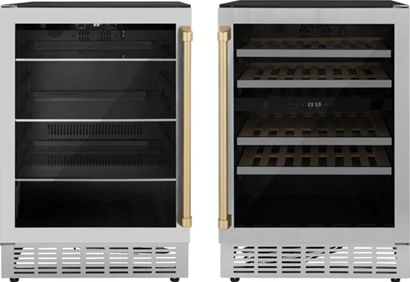
An under counter wine cooler is designed to fit beneath a countertop, similar to other built-in kitchen appliances. This configuration can make efficient use of lower cabinet space while integrating the cooler into a kitchen, bar, entertainment area, or dining space.
Built-in models often require ventilation through the front or another specified location because the unit needs to release heat generated during operation.
A freestanding wine cooler should not automatically be installed inside cabinetry. Freestanding units can require airflow around the sides, rear, or top, depending on the design.
Always follow the manufacturer’s installation requirements.
What Should You Consider When Installing an Undercounter Model?
Measurements are critical for an under-counter installation. Width, height, depth, door clearance, ventilation requirements, and electrical access should all be checked.
Cabinet openings should correspond to the appliance’s installation specifications rather than simply matching a nominal size.
Door swing is also important. The door needs sufficient clearance to open fully without hitting cabinets or adjacent appliances.
A professional installation may be appropriate when cabinetry or electrical modifications are required.
How Should a Wine Cooler Be Maintained?
Regular maintenance can help keep the appliance operating properly. Interior shelves should be cleaned according to the manufacturer’s instructions, and spills should be removed promptly.
Door seals should be checked periodically for dirt or damage because an ineffective seal can allow warm air to enter.
Ventilation areas should remain unobstructed. Dust accumulation around accessible ventilation components can also affect performance.
Temperature should be monitored periodically, particularly if the appliance contains valuable bottles. A sudden temperature change may indicate an equipment problem requiring attention.
What Should You Check Before Buying?
Before purchasing a wine cooler fridge, consider the following:
- Bottle capacity
- Bottle shapes you typically store
- Single- or dual-zone operation
- Temperature range
- Temperature stability
- Door design
- UV protection
- Shelf configuration
- Noise level
- Vibration characteristics
- Ventilation requirements
- Installation dimensions
- Energy consumption
- Warranty and service availability
A wine cooler should be selected according to the collection it needs to accommodate rather than simply based on appearance.
Is a Wine Cooler Worth It?
A dedicated cooler can be worthwhile for people who regularly purchase wine and want more consistent storage conditions than a conventional refrigerator can provide.
It can also offer better organization and convenient access. However, casual wine drinkers may not need a dedicated appliance, particularly if bottles are purchased shortly before consumption and stored under suitable household conditions.
The value therefore depends on storage duration, collection size, wine types, available space, and personal priorities.
Conclusion
A wine cooler fridge provides a controlled environment designed specifically for wine storage. Temperature stability, bottle capacity, zone configuration, light exposure, ventilation, and installation requirements are among the most important considerations when selecting one. For kitchens and home bars with limited floor space, an undercounter wine cooler fridge can integrate wine storage beneath the countertop, while a dual-zone wine cooler refrigerator can provide separate temperature settings for different wine categories. Before purchasing, carefully measure the intended installation area and verify the manufacturer’s temperature, ventilation, electrical, and clearance requirements. Considering the actual bottle collection and storage habits can help ensure that the chosen appliance provides useful capacity and appropriate conditions rather than unnecessary features.