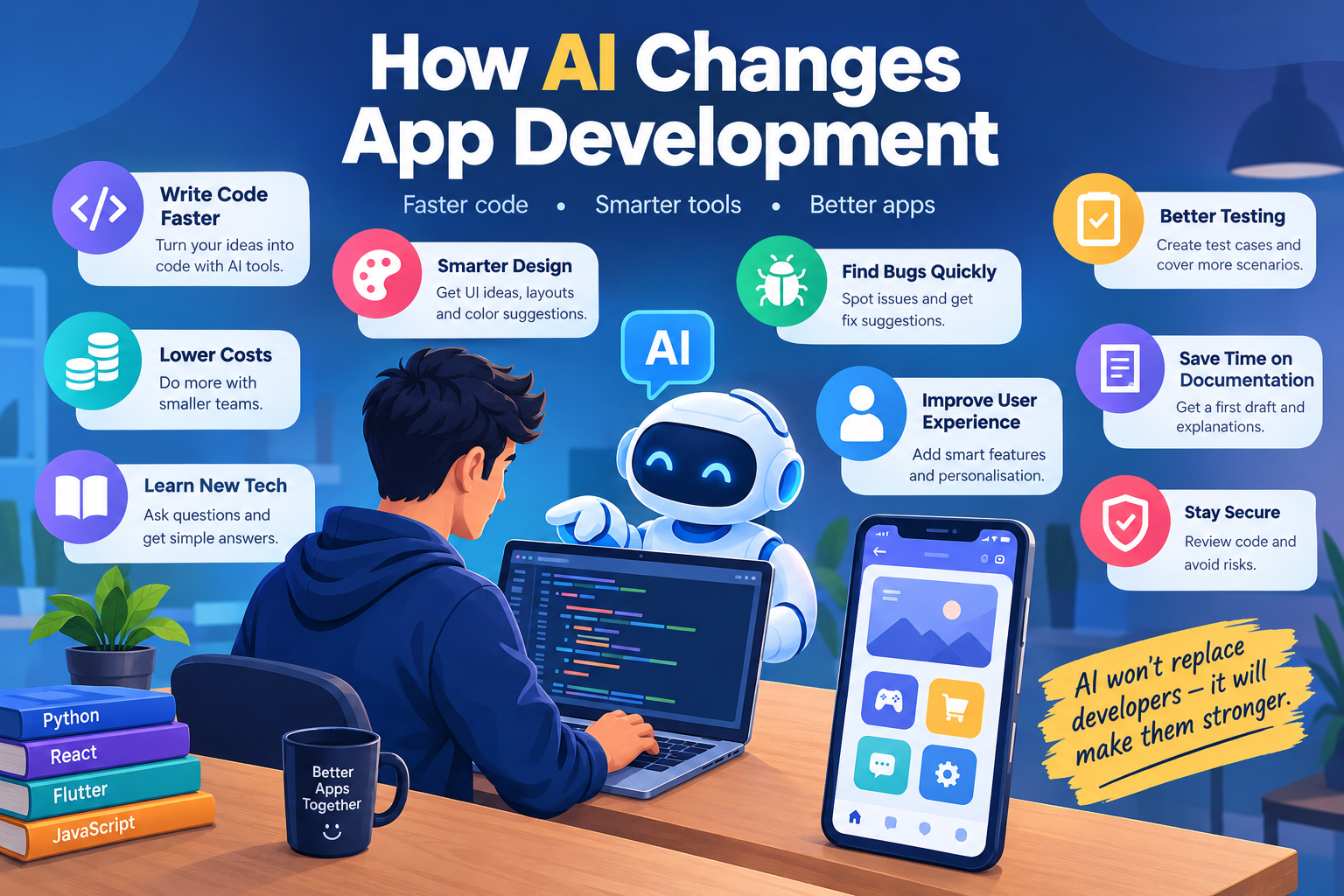
A few years back, building an app was a slow grind: long stretches of manual coding, repeated rounds of testing, and small changes that somehow still ate up entire weeks. That picture is shifting quickly. Artificial intelligence has moved from being a buzzword to becoming an everyday part of how software and games get planned, built, and shipped.
This shift doesn’t mean developers are stepping aside. Someone still has to understand what the project actually needs, review the output, make the calls that really matter, and handle the problems no algorithm can solve on its own. What has changed is how much of the routine work gets automated before a human ever looks at it.
Writing Code Gets a Head Start
The clearest change shows up in day-to-day coding. Rather than opening a blank file, a developer can describe what they need in plain language, such as a sign-up form with an email field and a password check, and get a working first draft in seconds.
That draft is rarely the finish line. AI-generated code can be outdated, slightly off from what was asked, or simply wrong in places. Treating it as a starting point rather than a finished product is what keeps this shortcut useful instead of risky.
Design Work Moves Faster
Putting together an app’s look and feel used to involve wireframes, color choices, button layouts, and separate versions for different screen sizes. Design tools built around AI can now generate first-pass layouts, icon sets, and color schemes from a short description.
This is a real advantage for small teams and solo builders who can’t afford a full design department. It’s not a finished product, though. A layout that looks great on one screen size can fall apart on another, so human review still decides what actually ships.
Bugs Surface Quicker
Every app ships with bugs; the only question is how long they take to find. AI tools can scan through code, flag odd patterns, translate confusing error messages, and suggest likely fixes.
Say an app crashes whenever someone uploads a photo. Feeding that error to an AI tool can point straight to the section of code handling image uploads. The fix still needs to be tested by a person, since solving one bug can easily create another.
Testing Covers More Ground
An app that runs smoothly on one phone can behave completely differently on another device, operating system, or network. AI can help generate test cases and highlight the situations most likely to cause trouble, such as a failed payment, an empty cart, or a dropped connection in a shopping app.
Manually writing tests for every possible scenario takes real time. AI narrows that workload down, though a team still needs to decide which results actually matter.
Development Costs Can Drop
Big projects have traditionally needed developers, designers, testers, and project managers working together. AI cuts down on the repetitive parts of that work, letting a smaller team, sometimes a single developer, handle coding, documentation, and testing tasks that used to require several specialists.
That said, cheaper doesn’t mean universally cheap. Apps dealing with payments, personal data, or large user bases still need experienced people making the hard calls.
Learning New Tools Gets Easier
Technology doesn’t sit still, and developers regularly have to pick up new languages or frameworks. AI tools work well as an on-demand tutor here, answering questions, producing simple examples, and explaining errors line by line.
This helps beginners the most, cutting out the hours normally spent digging through forums. Still, an AI’s explanation isn’t always accurate, so checking it against official documentation is a habit worth keeping.
AI Shapes the Apps Themselves
Beyond development, AI now shows up inside the finished product. Shopping apps recommend items based on browsing habits, music apps suggest songs from listening history, and photo apps sort pictures by recognizing faces or objects.
These features add real value, but they raise privacy questions too. Users don’t always want every action tracked, which means teams need to be upfront about what data gets collected and why.
Documentation Writes Itself, Sort Of
Writing documentation is a task most developers put off. AI can turn existing code into a readable first draft, explaining functions and processes in plainer language than the code itself offers.
Someone still has to check the result, though. Code changes constantly, and a documentation draft that isn’t updated alongside it quickly becomes misleading.
Developers Aren’t Going Anywhere
There’s a persistent idea that AI will eventually replace app developers outright. In practice, the job is evolving rather than disappearing. AI handles a lot of repetitive work well, but understanding what a client actually needs, weighing security trade-offs, and deciding when a suggestion doesn’t make sense still requires a person.
A poorly written prompt won’t produce a good app any more than a poorly written spec would. Human judgment remains the deciding factor, even as the daily workflow shifts toward planning, reviewing, and refining rather than typing every line by hand.
Security Still Needs Attention
Copying AI-generated code without review can quietly introduce security gaps, especially in apps handling passwords, payment details, or personal information. Code that runs fine on the surface can still leave an opening for attackers.
Treating AI output as a suggestion rather than a finished, trustworthy component is the safest way to work with it.
Where This Is Headed
AI is likely to become a standard part of the app development toolkit, used from early planning through coding, testing, and long-term maintenance. That shift could let smaller teams take on more ambitious projects than before.
Knowing how to question an AI’s output may end up mattering just as much as knowing how to request it in the first place. The best outcomes will keep coming from a mix of both: AI handling the repetitive load, and people bringing judgment, creativity, and accountability to the table.
Final Thoughts
AI is already reshaping how apps get written, tested, designed, and maintained, but it isn’t a substitute for careful planning or human oversight. The real skill going forward isn’t just using AI tools, it’s knowing when to trust them and when to double-check their work.
App development isn’t vanishing because of AI. The tools are changing, and the way people build apps will keep changing right alongside them.