Effective communication is an important part of building productive and collaborative teams. People often have different ways of approaching tasks, communicating with colleagues, responding to challenges, and making decisions. Understanding these differences can help organizations create more intentional approaches to teamwork and professional development.
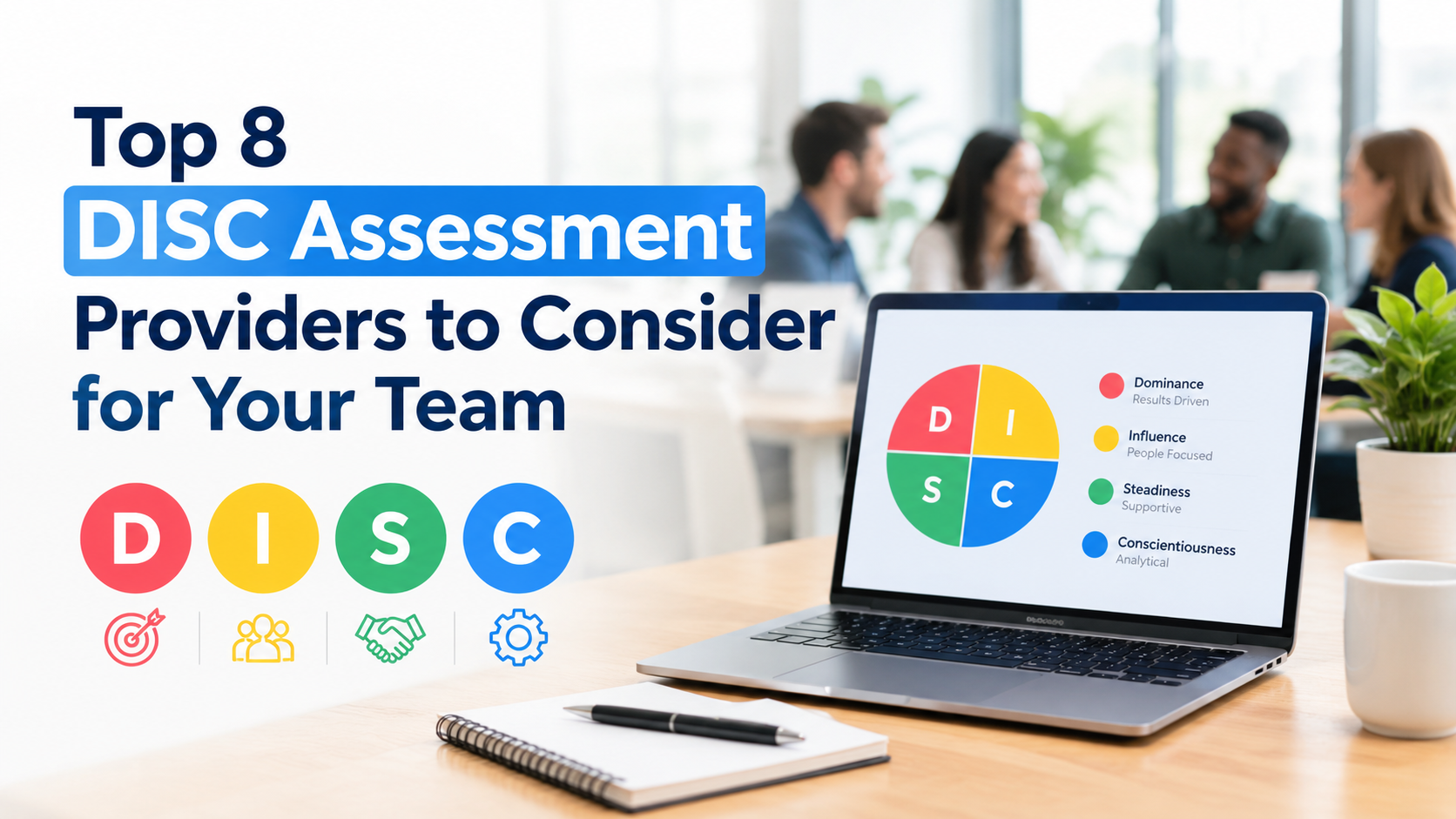
A DISC assessment is one tool organizations can use to explore behavioral styles and communication preferences. The DISC framework is commonly associated with four behavioral dimensions: Dominance, Influence, Steadiness, and Conscientiousness. While providers may use the framework in different ways, the general purpose is to give individuals and teams a structured way to discuss behavioral tendencies.
Today, organizations can choose from a range of DISC assessment providers. Each may offer different assessment formats, reports, training resources, coaching programs, and workplace applications.
If your organization is researching options, here are eight DISC assessment providers to consider.
1. DISC Plus Profiles
DISC Plus Profiles provides DISC-based profiles designed to help individuals understand behavioral preferences and communication styles. Its assessment approach can be relevant to individuals, teams, and organizations interested in developing greater awareness of workplace behavior.
DISC profiles can provide a framework for discussing how people approach communication, tasks, collaboration, and different workplace situations. Organizations may incorporate these insights into professional development, team discussions, coaching, or communication activities.
When considering DISC Plus Profiles, teams can look at how the assessment results and supporting resources fit into their existing development programs. Understanding the intended audience and available assessment options can also help organizations select an appropriate solution.
For teams that want to introduce behavioral-style discussions into their workplace development activities, DISC Plus Profiles is one provider worth researching.
2. Everything DiSC
Everything DiSC is a workplace assessment solution associated with Wiley. It uses the DiSC model to help participants explore their behavioral styles and consider how those styles can influence workplace interactions.
The Everything DiSC portfolio includes programs designed for different professional applications. These can include areas such as workplace communication, leadership, team development, sales, and professional relationships.
One of the considerations when evaluating a workplace assessment is how easily the results can be connected to practical learning activities. Assessment information can become more useful when participants have opportunities to discuss their results and consider how the insights relate to their everyday interactions.
Organizations researching Everything DiSC can review the different programs available and determine which approach aligns with their specific goals, audience, and development initiatives.
3. TTI Success Insights
TTI Success Insights provides assessment solutions for organizations, coaches, consultants, and professionals. Its portfolio includes behavioral assessments that can help participants explore workplace behaviors and preferences.
Behavioral assessment can be used in a variety of professional contexts. For example, organizations may incorporate assessment insights into leadership development, employee coaching, team-building programs, or broader talent-development initiatives.
When reviewing TTI Success Insights, organizations may want to consider the type of assessment they need, the format of the resulting reports, and the resources available for interpreting and applying assessment information.
It is also useful to consider how an assessment fits within an organization’s wider people-development strategy. Rather than treating an assessment as an isolated activity, teams can connect the results with coaching, training, communication exercises, and other development opportunities.
4. Assessments 24×7
Assessments 24×7 offers online assessment solutions covering DISC behavioral styles and other areas relevant to personal and professional development.
A DISC assessment can provide individuals with a structured way to reflect on their behavioral preferences. Within a team setting, results can also provide a starting point for conversations about communication, collaboration, and different approaches to workplace situations.
Organizations considering Assessments 24×7 can evaluate the available assessment formats, reports, customization possibilities, and supporting resources. It is also helpful to determine whether the assessment is intended primarily for individual use, team development, coaching, or another application.
The practical value of any assessment depends partly on how the organization uses the information afterward. Providing participants with opportunities to discuss their results and apply relevant insights can help connect assessment activities with broader development goals.
5. PeopleKeys
PeopleKeys provides DISC assessment and behavioral profiling solutions for individuals and organizations. Its resources can be used in contexts such as professional development, coaching, leadership, communication, and team-building activities.
One potential application of DISC-based information is helping team members develop a common vocabulary for discussing behavioral preferences. For example, employees can use assessment results as a starting point for conversations about how they prefer to communicate, receive information, approach tasks, or interact with others.
Organizations considering PeopleKeys should first identify the purpose of the assessment. The requirements for an individual coaching program may differ from those of a large-scale team-development initiative.
Reviewing available reports, training resources, implementation options, and intended use cases can help organizations understand how a PeopleKeys solution may fit into their development plans.
6. Extended DISC
Extended DISC provides assessment and development solutions based on the DISC behavioral model. Its approach is intended to help individuals and organizations explore behavioral styles and differences.
Behavioral differences can influence the way people communicate and work together. A structured framework such as DISC can give teams a way to discuss those differences without assuming that every individual approaches workplace situations in exactly the same way.
Extended DISC can be considered by organizations looking at behavioral assessment as part of team development, leadership activities, coaching, or workplace communication initiatives.
Before choosing an assessment, organizations should consider how the results will be introduced and interpreted. Providing context around behavioral profiles can help participants understand that assessment results are intended as development tools rather than fixed descriptions of everything an individual can or cannot do.
7. Thomas International
Thomas International provides assessment solutions for areas including recruitment, talent management, leadership development, and employee development. Its broader assessment portfolio includes tools designed to provide insights into workplace behavior.
For organizations, behavioral assessment can form one component of a wider people-development strategy. Depending on the organization’s objectives, assessment information may be incorporated into coaching conversations, leadership programs, team development, or employee-development activities.
When evaluating Thomas International, organizations can consider the specific assessment they require and how it fits with their existing talent-management processes.
It is also important to establish clear expectations about how assessment results will be used. When employees understand the purpose of an assessment and how the information will support development, the process can become a more meaningful part of an organization’s learning strategy.
8. Crystal
Crystal is a workplace personality and people analytics platform that provides personality insights for professional communication and collaboration.
Its tools can be used to explore personality and communication preferences in workplace contexts. Organizations and individuals may use these insights when considering communication approaches, team interactions, leadership, and professional relationships.
When introducing personality information into a workplace, context is important. Individuals are influenced by many factors, and a personality or behavioral profile represents one perspective rather than a complete description of a person.
Organizations considering Crystal can examine its available features and determine how personality insights could complement their existing communication and development initiatives.
How to Choose a DISC Assessment Provider
With several providers available, organizations may find it helpful to establish a few selection criteria before making a decision.
Define Your Objective
Start by identifying what you want the assessment to accomplish. Your objective might be improving team communication, supporting leadership development, helping employees understand their behavioral preferences, or providing resources for coaching.
A clearly defined goal makes it easier to identify the assessment features that matter most.
Consider Your Audience
Think about who will complete the assessment. A solution designed for individual professional development may have different requirements from one intended for managers, teams, coaches, or large organizations.
Understanding your audience can help narrow down the available options.
Review the Reports
Assessment reports can differ in structure, length, terminology, and level of detail. Before selecting a provider, consider whether the reports will be understandable and useful for your intended participants.
If managers or facilitators will be involved, also consider what resources are available to help them explain the results.
Look at Supporting Resources
The assessment itself is only one part of the process. Training materials, facilitator guides, coaching resources, workshops, and other learning tools may help organizations integrate assessment results into broader development activities.
Consider Team Features
If your goal is team development, look at how the provider supports group use. Team-oriented resources can help participants move from individual results toward discussions about communication and collaboration.
Review Data Practices
Organizations should also consider how assessment data is collected, stored, accessed, and used. Reviewing relevant privacy and data-handling information can be an important part of the selection process.
Ways Teams Can Use DISC Assessment Insights
Once employees complete an assessment, organizations can use the results in several development activities.
One approach is to use DISC insights during team workshops. Participants can discuss behavioral preferences and consider how different styles may affect everyday communication.
Managers can also incorporate assessment results into development conversations. Instead of focusing only on an individual’s profile, discussions can explore practical questions such as how the person prefers to receive feedback, communicate information, or approach workplace challenges.
Teams can also use DISC concepts when establishing communication guidelines. For example, a team might discuss how to structure meetings, share information, or provide feedback in ways that accommodate different communication preferences.
Another potential application is leadership development. Managers can reflect on their own communication approaches and consider how they may adapt their style when working with people who have different preferences.
Using Assessment Results Responsibly
A behavioral assessment should generally be viewed as a development resource rather than a permanent label.
People can adapt their behavior based on their responsibilities, environment, experience, and circumstances. Assessment results therefore work best when they encourage reflection and discussion rather than limiting expectations about what someone can do.
Organizations should also avoid using a single behavioral assessment as the sole basis for important employment decisions unless the assessment is specifically validated and appropriate for that purpose. Instead, organizations can consider how assessment information fits alongside relevant skills, experience, performance information, and other appropriate factors.
Final Thoughts
DISC assessments can provide organizations with a structured framework for exploring behavioral preferences and workplace communication. They can be incorporated into activities ranging from team development and coaching to leadership and professional development.
The eight providers discussed in this guide—DISC Plus Profiles, Everything DiSC, TTI Success Insights, Assessments 24×7, PeopleKeys, Extended DISC, Thomas International, and Crystal—offer different approaches and resources for organizations researching behavioral and personality assessment solutions.
Before selecting a provider, consider your objectives, target audience, reporting requirements, available learning resources, team-development needs, implementation process, and data practices.
Most importantly, think about what will happen after employees complete the assessment. When assessment insights are connected to meaningful conversations, training, coaching, and practical workplace activities, they can become part of an ongoing approach to professional development and team communication.
FAQs
1. What is a DISC assessment?
A DISC assessment is a behavioral assessment based on the DISC framework, which is commonly associated with Dominance, Influence, Steadiness, and Conscientiousness.
2. What are DISC assessments used for?
Organizations may use DISC assessments for team development, communication training, coaching, leadership development, and increasing awareness of behavioral preferences.
3. Can teams take a DISC assessment together?
Yes. Individuals can complete assessments separately and then discuss their results as a team, depending on the provider and the organization’s intended use.
4. How long does a DISC assessment take?
The time required can vary depending on the specific assessment and provider. Organizations should check the assessment details before implementation.
5. Are all DISC assessments the same?
No. Providers may differ in assessment design, reports, terminology, interpretation, training resources, and workplace applications, even when they use the DISC framework.
6. How should companies use DISC results?
DISC results can be used as a starting point for conversations about communication, collaboration, leadership, and professional development while avoiding overly rigid interpretations of individual behavior.