

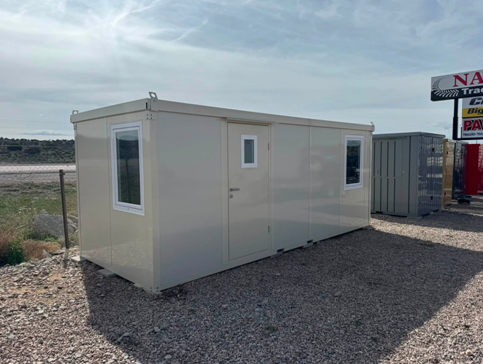
Storage needs can change quickly when a household is moving, renovating, decluttering, or simply running out of available space. Businesses can face similar challenges when they need temporary room for equipment, inventory, supplies, or documents. Traditional storage facilities can help, but they may not always provide the convenience of having storage available directly at the property.
Portable storage units offer another approach by bringing a storage container to a location where it can be loaded and accessed according to the user’s needs. Depending on the provider and service arrangement, the unit may remain on-site or be transported to another location.
Understanding how portable storage works, what can be stored, and which features to evaluate can help homeowners and businesses determine whether this type of storage is suitable for their situation.
What Are Portable Storage Units?
Portable storage units are movable storage containers designed to hold belongings, equipment, or other items securely. Unlike a conventional storage room, the container itself can be delivered to the customer’s property in many service models.
This can make loading and organizing belongings more convenient because items do not necessarily have to be transported back and forth to a distant storage facility.
Portable units come in different sizes and configurations. The appropriate choice depends on the volume and type of items being stored, as well as the available space at the property.
How Does Portable Storage Work?
The process generally begins with selecting an appropriately sized storage unit and arranging delivery. Once the unit is positioned, customers can load their belongings at their own pace, depending on the provider’s terms.
Some customers keep the container on their property for convenient access. Others may have it transported to another location or storage facility after loading.
Before arranging delivery, it is important to confirm where the unit can be placed. The delivery area may need sufficient clearance for the delivery vehicle and should provide a stable surface that can safely support the container.
When Can Portable Storage Be Useful?
Portable storage can be useful during home renovations, relocations, remodeling projects, seasonal organization, and major decluttering efforts.
During a renovation, furniture and household belongings can be moved out of the work area without requiring repeated trips to an off-site facility. Someone preparing to move can also use a portable unit to gradually pack and organize possessions before moving day.
Businesses may use portable storage when expanding, remodeling, managing seasonal inventory, or temporarily storing equipment and supplies.
Choosing the Right Storage Unit Size
Size is one of the most important factors when selecting a portable storage container. Choosing a unit that is too small can make loading difficult, while an unnecessarily large unit may increase costs.
Start by creating an inventory of the items that need to be stored. Grouping furniture, boxes, appliances, equipment, and other belongings can provide a better estimate of the required space.
It is also helpful to plan how items will be arranged inside the unit. If you expect to access specific belongings during the storage period, leave appropriate pathways rather than filling every available space.
What Can You Store?
Portable storage units can accommodate many common household and business belongings, but restrictions vary by provider. Typical items may include furniture, clothing, appliances, boxes, tools, equipment, and non-perishable household goods.
Certain materials may not be permitted because of safety, legal, environmental, or transportation concerns. Hazardous substances, flammable materials, perishable food, and other restricted items should never be placed in a storage unit unless the provider specifically confirms that they are allowed.
Always review the provider’s list of prohibited items before loading the container.
Protecting Your Belongings
Proper packing can make a significant difference when using portable storage. Sturdy boxes, protective wrapping, furniture covers, and appropriate padding can help reduce the risk of scratches, dents, and other damage.
Heavy items should generally be placed toward the bottom, while lighter boxes can be positioned above them. Furniture should be protected and arranged so it does not shift unnecessarily during transportation.
Moisture protection is another consideration. Items that are sensitive to humidity may require additional protective packaging, particularly when they will remain in storage for an extended period.
On-Site Storage vs. Traditional Storage
One major advantage of portable storage is accessibility. Having a container at your property can make it easier to load and retrieve belongings without traveling to a separate storage facility.
Traditional storage facilities, however, may offer advantages such as dedicated security infrastructure, climate-controlled units, and different access arrangements.
The better option depends on how often you need access, how much space is available at your property, the duration of storage, and the type of belongings involved.
Planning the Placement of a Portable Unit
Before delivery, evaluate the proposed placement area carefully. The surface should be reasonably level and suitable for supporting the unit.
Check for obstacles such as low tree branches, utility lines, narrow driveways, fences, parked vehicles, and other structures that could interfere with delivery.
It is also important to consider how the unit will affect normal use of the property. A well-planned location can make loading easier while minimizing disruption to driveways, walkways, and parking areas.
What to Ask a Storage Provider
Before reserving a portable storage unit, ask about dimensions, delivery procedures, rental periods, access rules, transportation fees, payment terms, and restrictions on stored items.
Security features should also be discussed. Find out what type of locking system is used and whether additional security measures are available.
If the unit will remain outdoors, ask about construction and weather protection as well. Understanding these details in advance can help you select a service that matches your storage requirements.
Portable Storage for Changing Needs
Storage requirements are rarely identical from one situation to another. A homeowner may need temporary space for several weeks during a renovation, while a business may require longer-term storage for equipment or inventory.
The flexibility of portable storage can make it useful when the timing or location of storage needs may change. However, customers should review the provider’s terms carefully if they expect the unit to be moved during the rental period.
Conclusion
Portable storage provides a flexible way to create additional space during moves, renovations, decluttering projects, and business transitions. Its biggest practical difference from conventional storage is the ability to bring the storage container closer to where the items are being loaded or used. For people considering my yard vault, comparing unit sizes, delivery arrangements, accessibility, and storage requirements can help determine which option makes sense for their particular situation. Choosing the right unit requires consideration of size, placement, access, security, weather protection, prohibited items, and overall rental terms. Careful packing and organization can also help protect belongings and make the available space more useful.


