
What Should Be Included in a Living Room Set for Different Household Sizes?

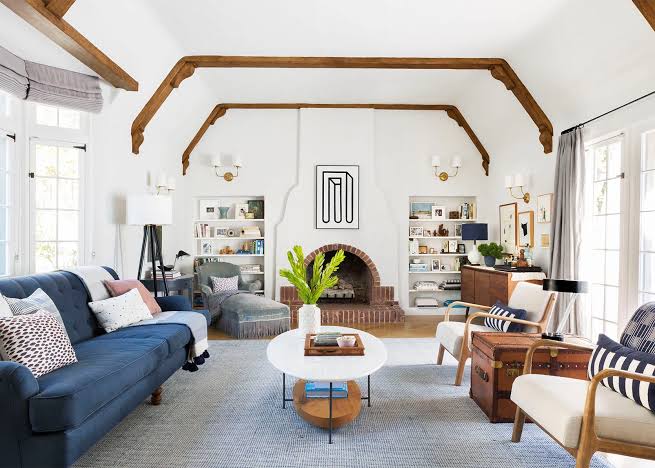
Choosing a living room set is less about buying a predetermined number of pieces and more about creating a comfortable arrangement for the people who use the space. A couple living in an apartment has different seating and storage needs than a household with several children or a home that regularly hosts guests.
The right combination depends on room dimensions, daily routines, seating preferences, and how much flexibility the household needs. Understanding those factors makes it easier to decide which pieces belong in a living room set and which are better purchased separately.
Start With Household Size and Daily Use
The number of people in a home provides a useful starting point, but it does not tell the entire story. A two-person household that frequently entertains may need more seating than a family of four that primarily uses the living room for quiet evenings.
Consider who uses the room most often. Do people watch television together, read independently, work from the sofa, or host friends and relatives? These habits should influence the furniture combination.
For shoppers comparing different configurations, reviewing options such as a living room set can help illustrate how sofas, loveseats, chairs, and tables are commonly grouped.
What a Small Household May Need
For one or two people, a large collection of furniture can consume valuable floor space without adding much practical benefit.
A sofa or apartment-sized sofa can serve as the primary seating. Depending on the room, one accent chair may provide additional seating without making the arrangement feel crowded. A compact coffee table or nesting tables can complete the setup while preserving circulation.
In a smaller living room, storage may also need to serve multiple purposes. An ottoman with concealed storage, for example, can function as seating, a footrest, and a place to keep blankets or other everyday items.
Prioritize Proportion
The furniture should correspond to the room’s dimensions. A compact household does not necessarily require miniature furniture; it requires pieces that leave enough space for movement and other activities.
What Works for a Medium-Sized Household
Households of three or four people often benefit from a more flexible seating arrangement. A standard sofa paired with a loveseat or accent chairs can provide several places to sit without requiring a very large sectional.
A coffee table should be large enough for the seating group while leaving practical walking space. Side tables are useful when people need convenient surfaces for drinks, lamps, books, or electronic devices.
This type of arrangement also allows individual seating preferences. One person can use an armchair while others share the sofa, making the room more versatile for everyday use.
Larger Households Need Flexible Seating
Families with several children or larger households generally need more seating and durable materials. A sectional can make efficient use of a larger room by providing several connected seats while establishing a defined gathering area.
However, a sectional is not always the only solution. A sofa combined with two chairs can offer greater flexibility because individual pieces can be repositioned when the household’s needs change.
Look closely at upholstery, cushion construction, cleanability, and frame quality when furniture will receive frequent daily use. Practical considerations become increasingly important as the number of users increases.
Consider Guests and Occasional Use
Household size should not be the only consideration. If the living room regularly accommodates visitors, additional seating may be worthwhile even when the permanent household is small.
Occasional chairs, ottomans, benches, and movable stools can provide extra capacity without permanently filling the room. Lightweight pieces are particularly useful when furniture needs to be rearranged before gatherings.
Don’t Overfurnish the Room
More seats do not automatically create a better living room. Excess furniture can restrict pathways, make cleaning difficult, and reduce the sense of openness.
Measure the room before purchasing and establish where the main seating area, television, windows, doors, and walking paths will be located.
Common Questions About Living Room Sets
Does a living room set need to include a sofa, loveseat, and chair?
No. The ideal combination depends on room size and household needs. Some spaces work better with a sofa and two chairs, while others can accommodate a sectional.
Is a sectional suitable for a small family?
It can be, provided its dimensions work with the room. A smaller sectional may offer useful seating without requiring several separate pieces.
Should every piece match?
Not necessarily. Coordinating colors, materials, and proportions can create a cohesive room without requiring identical upholstery or designs.
Ultimately, a living room set should reflect how a household actually lives. The number of residents provides a starting point, but room dimensions, entertaining habits, comfort preferences, storage requirements, and furniture durability are equally important. A thoughtfully chosen combination provides enough seating and functionality while leaving the room comfortable and easy to use.


