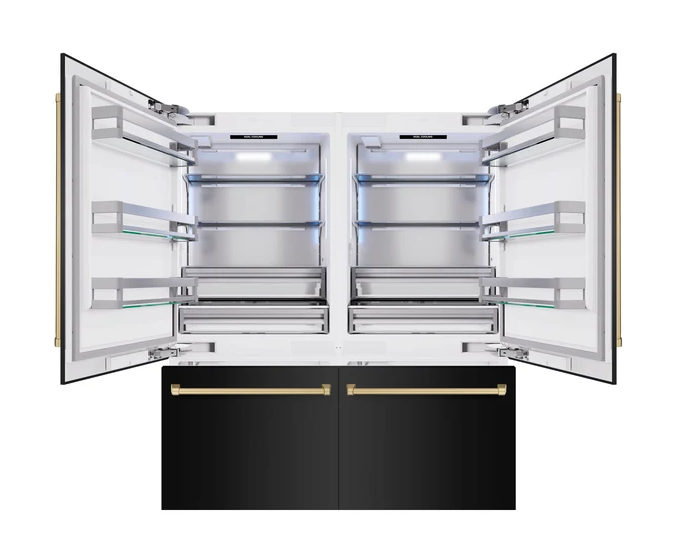
Refrigerators are among the most important appliances in a kitchen, but their design can have a significant effect on the overall appearance and layout of the room. Built in fridges are designed to be installed within a dedicated cabinetry structure rather than standing independently like conventional freestanding refrigerators.
These appliances are generally designed to integrate closely with surrounding cabinets and countertops. Some models can be installed with custom panels so that the refrigerator blends with the cabinetry, while others retain a visible appliance finish while maintaining a more integrated appearance.
Built-in refrigeration is particularly common in kitchens where design consistency and long-term planning are priorities. However, the installation process is more precise than that of a typical freestanding refrigerator, making measurements and preparation especially important.
How Are Built-In Refrigerators Different From Freestanding Models?
The biggest difference is how the refrigerator interacts with the kitchen cabinetry.
A freestanding refrigerator is designed to stand independently and typically has finished exterior sides. It can generally be moved or replaced without extensive modifications to the kitchen.
A built-in refrigerator, on the other hand, becomes part of the kitchen’s overall structure. It is designed around a specific opening and installation configuration. Built-in models are often shallower than standard-depth freestanding refrigerators, allowing them to align more closely with surrounding cabinetry.
This integration can produce a more continuous visual appearance, but it also means that replacing the refrigerator may require more planning.
Why Choose a Built-In Refrigerator?
One of the primary reasons homeowners choose built-in refrigeration is aesthetics. When properly installed, the refrigerator can align closely with cabinets and create a cleaner, more architectural appearance.
Built-in appliances can also help establish a consistent visual line throughout a kitchen. This can be particularly useful in open-plan spaces where the kitchen is visible from living and dining areas.
Another advantage is that built-in refrigerators are intended for permanent installation. For homeowners undertaking a complete kitchen renovation, this can make it easier to coordinate the refrigerator with cabinetry, countertops, flooring, and other appliances.
However, these benefits come with a higher level of planning. Built-in appliances are less flexible once installed and can be more complicated to replace than freestanding models.
What Sizes Are Available?
Built-in refrigerators are available in multiple widths, heights, configurations, and capacities. The exact dimensions vary considerably by model.
Some designs are tall and relatively shallow, while others are wider and designed to provide substantial food-storage capacity.
Consumers should never assume that a refrigerator will fit simply because its advertised width matches the cabinet opening. The actual appliance dimensions, door clearance, ventilation requirements, and required installation gaps all need to be checked.
The cabinet opening should be measured after accounting for flooring, trim, panels, and other finished surfaces.
Why Is Accurate Measurement Important?
Measurement is one of the most important steps when installing built in fridges.
The width, height, and depth of the opening should be measured carefully. Door swing and handle projection also need to be considered because the refrigerator must be accessible without interfering with nearby cabinets or walls.
Ventilation requirements are equally important. Built-in refrigeration systems are designed with specific airflow arrangements, and blocking the required ventilation can affect operation.
Installation documentation should always take priority over generic dimensions because requirements can vary significantly between refrigerator models.
What Is a Panel-Ready Refrigerator?
A panel-ready refrigerator is designed to accept a custom cabinet panel on its front. Once installed, the refrigerator can visually blend into the surrounding cabinetry.
This approach can create a highly integrated appearance, particularly in contemporary kitchens where homeowners want appliances to be less visually prominent.
Panel thickness, hinge movement, door clearance, and mounting requirements need to be checked before cabinetry is constructed.
The cabinetmaker and appliance installer should work from the manufacturer’s specifications to ensure that the panel fits correctly and does not interfere with refrigerator operation.
What Refrigerator Configurations Can Be Built In?
Built-in refrigeration is available in several configurations. Common options include:
- Bottom-freezer refrigerators
- French-door refrigerators
- Side-by-side refrigerators
- Refrigerator columns
- Freezer columns
- Combination refrigerator-freezer systems
Column refrigeration can provide additional flexibility because refrigerator and freezer units can be installed separately. This can be useful in larger kitchens where homeowners want to customize storage capacity.
The best configuration depends on household size, food-storage habits, kitchen dimensions, and preferred access to refrigerated and frozen foods.
Do Built-In Refrigerators Have Less Storage?
Capacity depends on the individual appliance rather than simply whether it is built-in.
However, built-in refrigerators are often designed with shallower bodies to align more closely with cabinetry. This can affect internal depth compared with some conventional-depth freestanding models. Freestanding refrigerators also tend to offer a wider selection of sizes and capacities.
For this reason, consumers should compare usable interior capacity rather than exterior dimensions alone.
Shelf configuration is also important. Adjustable shelves, door storage, drawers, and freezer organization can significantly affect how much food can be stored conveniently.
What Are Smart Built-In Refrigerators?
Technology has also become part of modern refrigeration. Smart built in fridges can incorporate connectivity and digital features that allow users to monitor or control selected refrigerator functions.
Depending on the model, smart capabilities can include temperature notifications, diagnostics, inventory-related tools, remote monitoring, or integration with compatible home systems.
Connected refrigerators can communicate with external devices through built-in or additional communication technology. ENERGY STAR’s connected refrigerator requirements, for example, address communication capabilities and interoperability considerations.
However, smart features should be considered optional conveniences rather than substitutes for basic refrigeration performance.
Are Smart Features Actually Useful?
The usefulness of smart technology depends on how it fits into a household’s routine.
Temperature alerts can be helpful if a refrigerator door is left open or the internal temperature rises unexpectedly. Remote monitoring may also provide reassurance when homeowners are away.
Some connected models can provide information about appliance status or maintenance needs.
However, consumers who rarely use smartphone controls or connected-home systems may gain limited value from these features. Core characteristics such as temperature stability, capacity, energy consumption, organization, and reliability should remain the priority.
How Important Is Energy Efficiency?
Refrigerators operate continuously, so energy consumption can have a meaningful effect on household electricity use.
When comparing models, consumers should review official energy information and estimated annual consumption where available. ENERGY STAR provides specifications and certification requirements for efficient refrigerators and freezers.
Energy efficiency should be considered alongside capacity. A larger refrigerator may naturally require more energy than a smaller model, so comparing appliances with similar capacities provides a more meaningful assessment.
Door seals, temperature settings, and proper ventilation can also affect how efficiently a refrigerator operates.
What About Installation and Maintenance?
Installation is more involved than simply plugging in a freestanding refrigerator. Depending on the model, installation may involve cabinetry preparation, water connections, electrical requirements, ventilation, door alignment, and custom panels.
Professional installation can be beneficial when the refrigerator is being integrated into custom cabinetry.
Maintenance should follow the manufacturer’s instructions. Door seals should remain clean and intact, ventilation areas should not be obstructed, and water filters should be replaced according to the recommended schedule when applicable.
Because the refrigerator is integrated into cabinetry, servicing can sometimes require additional access planning compared with a freestanding appliance.
Are Built-In Refrigerators More Expensive?
The total cost of built-in refrigeration can be higher than that of many freestanding alternatives. The appliance itself may cost more, while custom cabinetry, panels, installation, electrical work, plumbing, or other modifications can add to the overall project cost.
Therefore, consumers should evaluate the complete installation rather than comparing refrigerator purchase prices alone.
The additional investment may be worthwhile for homeowners who prioritize a seamless kitchen design and plan to keep the same layout for many years.
For households that prioritize flexibility, easier replacement, or lower installation complexity, a freestanding refrigerator may be more practical.
Who Should Consider a Built-In Refrigerator?
Built-in refrigeration can be particularly suitable for homeowners undertaking a major kitchen renovation or constructing a new kitchen from the beginning.
It may also appeal to people who prioritize a coordinated cabinetry appearance and are comfortable with a more permanent appliance installation.
A freestanding refrigerator may be preferable for renters, homeowners expecting to remodel again soon, or households that want maximum flexibility when replacing appliances.
There is no universal winner. The best choice depends on the kitchen design, budget, storage requirements, and long-term plans.
Conclusion
Built in fridges can provide a seamless appearance by integrating refrigeration more closely with kitchen cabinetry. Their shallower profiles, panel-ready possibilities, and range of configurations make them particularly suitable for carefully planned kitchen renovations. When considering smart built in fridges, homeowners should evaluate connected features alongside fundamental factors such as temperature control, storage capacity, energy consumption, ventilation, maintenance, and installation requirements. Smart functionality can add convenience, but it should not outweigh the importance of reliable refrigeration performance. Before purchasing, measure the finished cabinet opening, check door and ventilation clearances, verify electrical and water requirements, and review the manufacturer’s installation documentation. For a permanent kitchen design, careful planning can help ensure that built in fridges provide both the desired visual integration and the everyday storage functionality a household needs.